
Let me tell you something that the AI companies would prefer you did not think too hard about.
Every time you send a request to GPT-4o or Claude Sonnet for a task that a cheaper, smaller model could have handled just as well, you are paying a premium for capability you did not use. And if you are doing this at any kind of volume, that unused capability is adding up to real money every single month.
This is not a niche developer problem. It is one of the most common and most expensive habits in AI development, and it happens because of one very human tendency: when something works, we stop questioning it. You tried GPT-4o, it worked, you kept using it for everything. Completely understandable. Also completely unnecessary.
How this habit forms and why it is so hard to break
When people first start building with AI APIs they almost always start with the best model available. It makes sense. You want your prototype to work. You want to be impressed. You want to show something that feels genuinely capable. So you reach for the flagship model and everything works great and you ship something and you move on.
The problem is that the model choice you made during prototyping becomes the model choice in production, which becomes the model choice forever, because nobody ever goes back and questions it. The bill comes in, it seems roughly in line with what you expected, and you have other things to worry about.
But here is what is actually happening. You built your cost expectations around the flagship model from day one, so you normalized that cost without ever knowing what it could have been if you had matched your model to your actual task requirements. You are not overpaying relative to your baseline. You are just overpaying.
What the different model tiers are actually good for
The AI model market has roughly three tiers right now and the differences between them are real but much more specific than most people assume.
The flagship models, GPT-4o, Claude Sonnet, Gemini 1.5 Pro, are genuinely better at complex reasoning, nuanced writing, handling ambiguous instructions, synthesizing information from multiple sources, and tasks that require deep understanding of context and subtext. If your application depends on any of those things consistently, the premium is probably justified.
The mid-tier models are better than most people give them credit for. They handle straightforward writing tasks, clear-cut analysis, simple question answering, and well-defined extraction jobs with quality that is close enough to the flagship tier that most users in most contexts would not notice the difference.
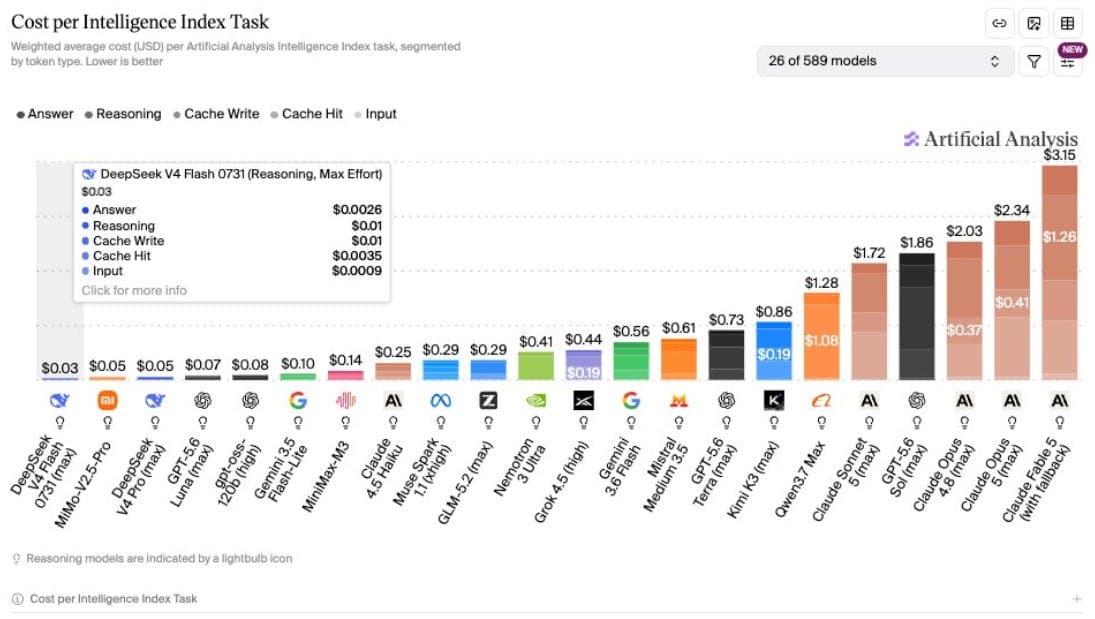
The small fast models, GPT-4o mini, Claude Haiku, Gemini Flash, are genuinely impressive for what they cost. Classification, simple summarization, basic extraction, routing decisions, formatting tasks, these all work extremely well on small models and the cost difference compared to flagship models is not ten or twenty percent. It is often five to ten times cheaper per token.
According to research published in the MIT Sloan Management Review on AI cost optimization, organizations that implement model routing strategies, directing simpler tasks to smaller models and reserving larger models for complex ones, consistently reduce their AI API spend by thirty to fifty percent without measurable quality degradation on user-facing outputs.
Thirty to fifty percent. Without users noticing. That is not a marginal optimization. That is a significant business decision that most teams are leaving on the table.
The test most people never run
Here is something I want you to actually do, not just read about and nod at.
Take your five most common request types in whatever you are building. The things you send to the API hundreds or thousands of times a day. Run each of them through your current flagship model and through a small model side by side. Evaluate the outputs honestly. Not against some abstract quality standard but against the actual bar your application needs to clear.
I will bet that at least two or three of those request types produce outputs on the small model that are good enough for your use case. Maybe not identical, but good enough. And good enough at one fifth the cost is a different product decision than good enough at the same cost.
The teams that do this test almost always find savings they did not expect. The teams that never do it keep paying for capability they are not using.
The routing approach that makes this practical
The reason most teams do not do model routing is that it feels complicated. You have one model, everything goes to it, it works. Adding routing logic means maintaining multiple integrations, writing classification logic, managing edge cases where you misroute something important to a cheap model and get a bad output.
These are real concerns but they are smaller than they seem. The simplest version of routing is not a sophisticated classifier. It is a handful of if statements based on things you already know about the request. Is this a user message over five hundred tokens that requires synthesis of complex information? Send it to the flagship model. Is this a short classification task with a defined set of output categories? Send it to the small model. Is this a formatting or extraction job on structured data? Small model.
You do not need to route perfectly to capture most of the savings. Routing sixty or seventy percent of your requests correctly already moves the needle significantly, and you can refine from there.
What to do right now
Before you do anything else, go look at your API usage breakdown by model and by request type if you have that instrumentation. If you do not have it, add it this week. You cannot optimize what you cannot see.
Then pick your single highest-volume, lowest-complexity request type and test it on a smaller model. Not all of them at once. Just one. See what happens to the output quality. If it holds up, switch that request type and watch what happens to your monthly bill.
The Tokens per Dollar Calculator on Prompt Toolbox is useful here because it lets you see exactly what the cost difference looks like in dollar terms for your specific token volumes, which turns an abstract optimization into a concrete number you can put in front of whoever approves the engineering roadmap.
The uncomfortable truth
The AI companies make more money when you use their most expensive models for everything. They are not going to tell you to route your simple tasks to cheaper models. The tutorials and demos you watch are almost always built on flagship models because that is what looks most impressive. The default in most SDKs is to make it easy to call one model and never think about it again.
None of that is in your interest. Matching your model to your actual task requirements is one of the highest-return decisions you can make in AI development and it is almost entirely invisible to your users. The quality they experience stays the same. The bill you pay does not.